How to increase strawberry yields? Abundant fruiting in strawberries
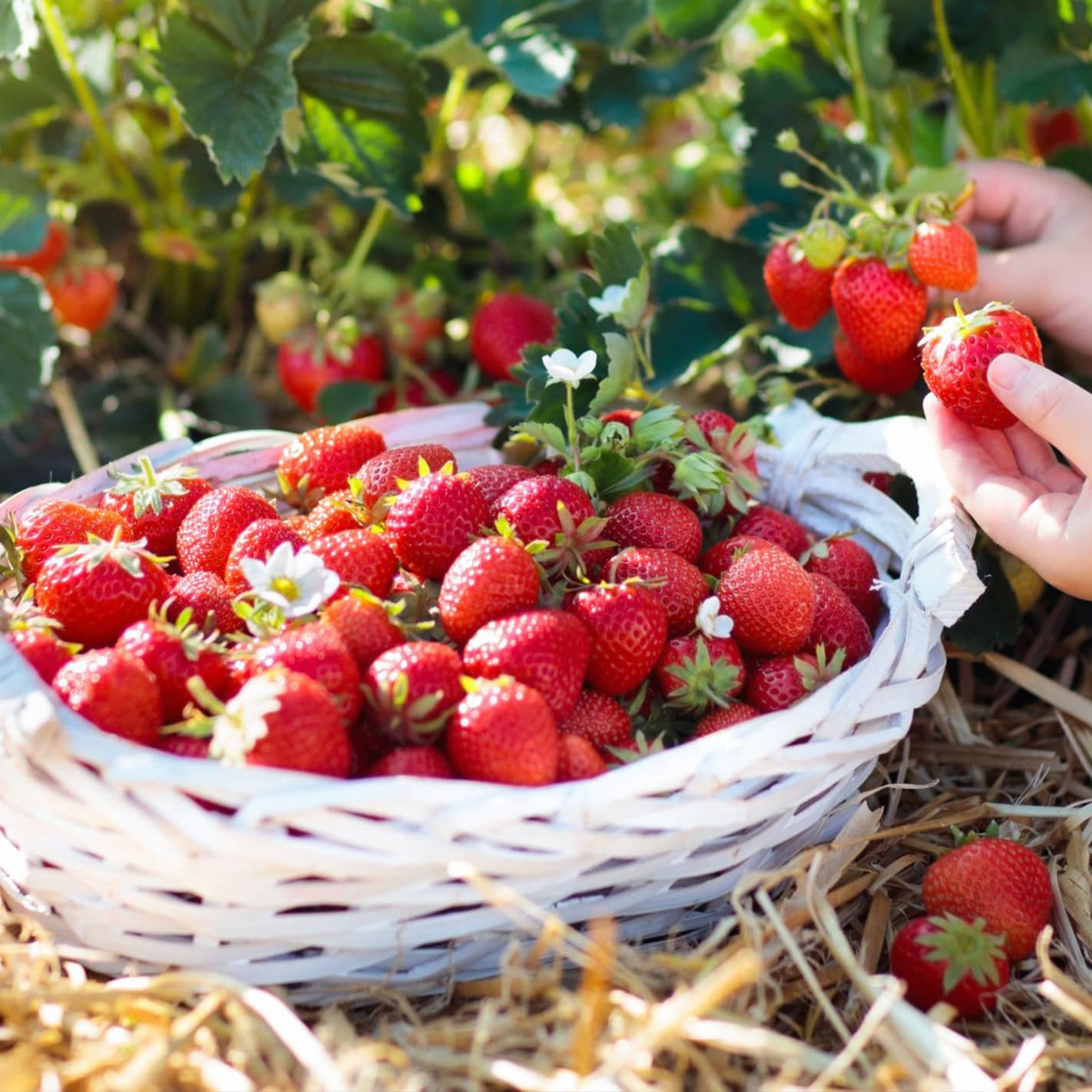
If you don't know what to do to grow abundantly fruiting strawberry plants, use our tips that will make their cultivation much more satisfying for you. We will help you avoid mistakes that cause strawberries to bloom and fruit poorly. Healthy, vigorous plants full of delicious fruit will delight you and your family if you only give them a bit of attention.
Why do strawberries not produce fruit? There may be many reasons
Among the causes of poor fruiting or a lack of fruit in strawberries is soil that is too acidic or too alkaline. The reason may also be improper fertilisation with nutrients, and quite often strawberries are not watered regularly. It also happens that the correct planting time is missed. Strawberry plants placed in the ground too early may freeze and become too weak to produce fruit.
Planting strawberries in autumn is a good idea, but it should not be done when the soil is already frozen, because they will not take root or will grow poorly. There is also the risk that the flowers appearing in spring on plants planted the previous year will freeze in April, and then no fruit will develop.
It is very important not to plant strawberries in the shade, because their fruits will be small and sour. A strawberry may also fail to produce fruit if it was planted too deeply or too shallowly.
It should also be noted that there are a few strawberry varieties that require pollinators, meaning other individuals, to produce fruit. For example, the variety ‘Florence’ requires a pollinator.
What can you do to make strawberries fruit better? 10 proven methods
- Provide them with a sunny location.
- Ensure the soil has the right acidity and fertility. Its pH should be between 5.5 and 6.5.
- Water the plants so that the soil does not dry out. Insufficient water causes strawberries to be smaller.
- Apply organic fertiliser before planting the strawberries.
- Avoid fertilisers that contain too much nitrogen. Use spring and autumn fertilisation to support abundant yields the following year.
- Remove weeds and pinch off excess runners, but carefully, so as not to damage the strawberry root system.
- Plant strawberries at intervals of no less than 30 centimetres.
- Protect strawberries with horticultural fleece during spring frosts.
- Follow crop rotation principles. Do not plant strawberries after strawberries, potatoes, tomatoes, brassicas, pumpkins or sunflowers.
- In the first year of cultivation, remove the first strawberry flowers.
What fertiliser should be used for strawberries?
Compost and manure work excellently for fertilising strawberries. The soil in which strawberries are planted should contain plenty of such fertiliser. Sometimes ordinary compost is not enough, and then you should use specialised fertilisers such as Biopon or Florovit. A natural fertiliser for strawberries in the form of nettle or horsetail slurry is also recommended.
When should strawberries be pruned?
Strawberries should be cut two weeks after fruiting has finished. Removing the leaves will strengthen the plants for the following year, and uncut runners and leaves contribute to the spread of diseases.
Strawberry care after harvest – many growers forget about this
To achieve abundant yields in the following growing year, you need to know how to care for strawberries after harvest. When the plants finish fruiting, you should wait two weeks and then cut the plants to a height of 6–7 centimetres. Strawberries should still produce new leaves and buds before winter, so the cutting date must not be delayed. The cut leaves and other plant parts must be removed from the beds. Before cutting the strawberries, it is recommended to remove weeds and trim the runners.
It should be noted that the care of everbearing strawberries after harvest looks slightly different. We do not prune them; we only remove shoots, fruits and runners showing signs of disease. After harvest, it is also a good idea to gently loosen the soil between the rows.
After fruiting is finished, strawberry fertiliser should also be applied. At this time, you can choose manure (it is recommended to use it outside the growing season) or apply mineral fertilisers that provide the plants with nitrogen, potassium and phosphorus. In autumn, nitrogen-free fertilisers are used. If pests and diseases appeared during the season, after cutting the leaves it is worth applying a biological protective spray or a fungicide.
Choose high-yielding strawberry varieties
If you want abundant harvests, choose strawberry varieties known for their high productivity. It is worth remembering that everbearing strawberries provide particularly heavy yields. One such variety is Albion, a vigorous plant that fruits in summer and autumn. ‘Albion’ produces numerous large and very tasty fruits and also stands out for its decorative qualities.
Another high-yielding variety is the mid-late Senga Sengana. This plant produces very aromatic and slightly tangy fruits. This variety is resistant to drought and low temperatures.
Among very productive strawberries is the old variety ‘Murzynek’. It is a mid-late strawberry with fragrant, juicy and fairly large fruits.
What to plant after strawberries?
It is said that strawberry cultivation has a greater chance of success if certain plants, such as brassica vegetables, are not planted before them. However, remember that strawberries should not grow in one place for more than 3–4 years. After this time, other plants should be planted in their place. Do not plant other strawberries or wild strawberries in soil where strawberries have grown, and also avoid raspberries and roses, which belong to the same family. Choose species that will help restore the nitrogen balance in the soil, as well as plants resistant to diseases that threaten strawberries. After strawberries, it is good to plant leguminous plants, because they enrich the soil with valuable minerals. You can also decide to grow carrots, and excellent options will be onions, garlic, parsley and dill. Tulips, daffodils and peonies are also planted after strawberries.