Secrets of Growing Strawberries: How to Cultivate Delicious and Beautiful Fruit?
Winter is slowly giving way to spring, and the first warm rays of the sun awaken thoughts of the coming summer days. With the rising temperatures, the season for juicy, flavourful fruits also arrives. An inseparable symbol of the European summer is undoubtedly the well-known and much-loved strawberry. Do you, just like us, want to avoid worrying in summer about whether the stores will have that delicious variety you like so much? If your answer is yes, we have some advice for you: plant and take care of your own seedlings to make your summer even more enjoyable with your own sweet fruit. But what if you once planted strawberries, cared for them with all your effort, yet the size of the harvest and their flavour did not bring you the satisfaction you hoped for, and your motivation for growing them disappeared? Don’t worry if this happened to you, or if this will be your first attempt — we will show you how to properly care for your dream strawberries.
There are many seedlings available on the market to choose from — different varieties and different seedling production technologies. It is a difficult choice, especially for a beginner gardener. But have you heard about Frigo strawberry seedlings? Frigo is a technology for producing strawberry seedlings. The digging of strawberry seedlings takes place at the end of autumn or at the beginning of winter, right after the growing season has ended. They are then sorted according to their class, cleaned of old leaves, protected against grey mould and packed into boxes. Frigo seedlings are stored in special chambers at temperatures from –1.5°C to –3°C until they are shipped. Seedlings stored under such conditions grow quickly after they are removed from cold storage and planted in the soil, and after approx. 4–6 weeks they produce their first fruits. They are ideal for both beginners and advanced growers. Isn’t it wonderful to enjoy your first long-awaited strawberries even after just 4 weeks? And this is exactly the effect provided by Frigo strawberry seedlings.
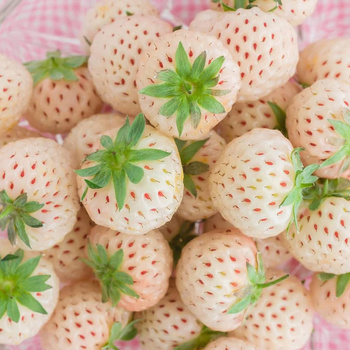
Of course, you must also choose the right strawberry variety, and this choice belongs only to you. It all depends on your preferences — whether you prefer classic local varieties, or perhaps more unique types rarely found in stores, such as the White Pineapple Strawberry, which is the opposite of a traditional strawberry. A white strawberry with red seeds — isn’t that a beautiful visual experience? And its pineapple flavour adds wonderful taste sensations. Or maybe you would prefer the Malinowa Strawberry, which resembles the flavour of a wild strawberry. You may also choose typical dessert varieties such as Holy and Elkat, which are perfect not only for direct consumption but also for desserts, jellies or preserves.
If you have already chosen your desired variety, we will reveal our secrets that will allow you to enjoy abundant and delicious harvests.
1. First, choose certified seedlings.
Certified seedlings are properly inspected, which ensures that they are free from various types of viruses.
2. Choose the right location.
Although strawberries are not very demanding, they do have a few simple requirements. Do not plant strawberries in places where potatoes, tomatoes or other strawberries previously grew, to avoid diseases and soil-related problems. Also find them a sunny spot, as this will ensure that the strawberries have a sweet taste.
3. Prepare the soil that strawberries like.
Optimal conditions for strawberries are provided by soil with a slightly acidic pH of 5.5–6.5. To improve its quality, about a month before planting it is worth mixing it with a large amount of compost or well-rotted manure. An alternative can be granulated manure, which is convenient to use, natural, safe and free from strong odour.
4. Do not let your strawberries compete with weeds.
Weeds compete with strawberries for water and nutrients, which makes them a threat to your desired harvest. An excellent way to limit them is to use black agricultural fleece, which naturally suppresses weed growth while allowing water and air to pass through. It also helps retain moisture in the soil, supports root development and accelerates plant growth. Using agricultural fleece has another advantage – the fruits stay clean. You can also support yourself with straw during the flowering phase, which reflects sunlight, slows fruit ripening and protects the berries from overheating.
5. Strawberries need space to grow well.
Place strawberry seedlings at intervals of about 30 cm, keeping 50 cm between rows. Cut the agricultural fleece in a cross and prepare an opening large enough for the roots to spread freely without curling (curled roots will not allow proper development). Pay attention to planting depth – too shallow may cause root drying, and too deep may cover the plant’s crown, which can inhibit growth.
6. Remember proper watering.
Maintain the right level of soil moisture. During droughts and fruiting periods, direct the water stream directly at the base of the plants, avoiding the leaves. It is best to water strawberries in the morning or evening to reduce water evaporation and ensure optimal hydration.
7. Regularly trim the runners.
Trimming the runners, the long shoots produced by the seedlings, allows the plant to focus its energy on growth and fruiting, making it stronger and better developed.
8. The time of harvesting strawberries matters.
To enjoy the full flavour of your desired strawberries, harvest fully ripe fruits, preferably on a sunny afternoon. To help the fruits stay fresh and firm longer, pick them with the calyx and a short, at least 1-centimetre piece of stem.
9. Plant care.
After fruiting has finished, carefully inspect your plants and prune all diseased leaves and rotten fruits with sharp pruners. Do not forget to regularly trim runners and remove weeds to maintain a healthy crop.
10. Feed your plants when they finish fruiting.
After harvest, it is worth enriching the soil with essential nutrients. Thanks to this, the plants will more easily produce new shoots, leaves and flower buds, and you will once again enjoy tasty fruits the following year. The best choice will be organic fertilisers intended for strawberries, available in garden shops.
11. Replacing old plants.
Strawberry plants are at their best for 3–4 years; after this time, they should be replaced so that you can continue enjoying your own fruits.
We hope that by knowing our secrets, you will enjoy your own tasty and aromatic strawberries.