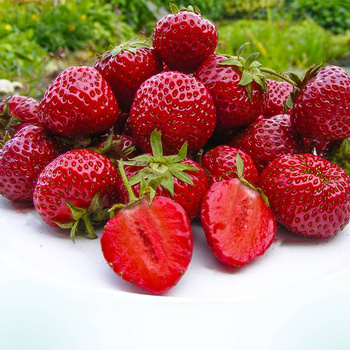
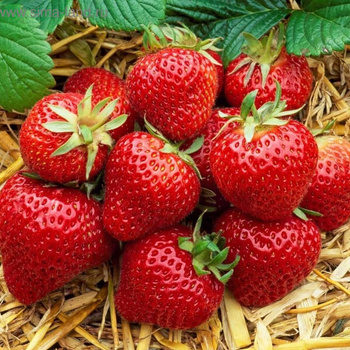
Which strawberry varieties are best for amateur allotment growing?
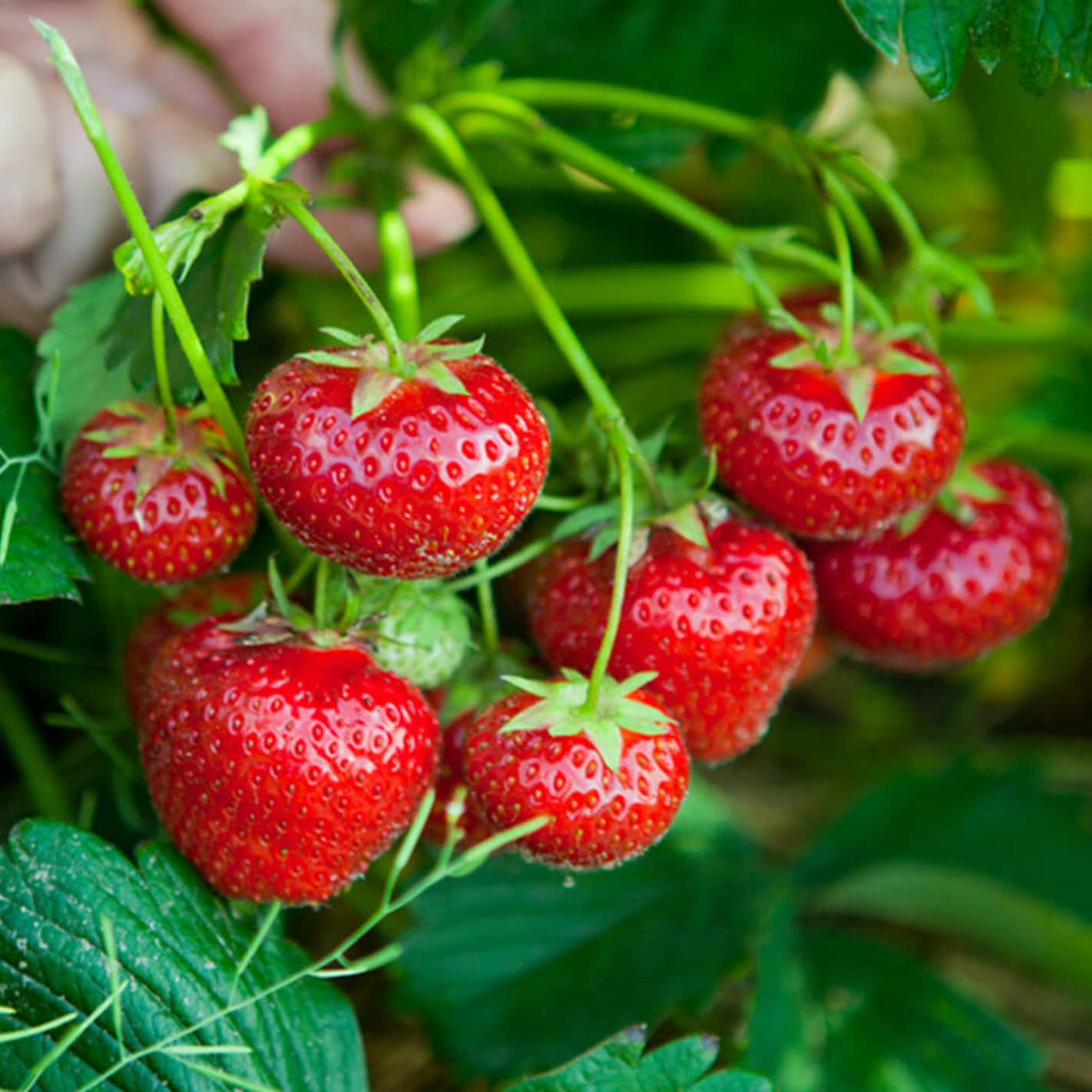
Do you want to grow strawberries but have never done it before, or perhaps your previous experience with growing these perennials producing exceptionally tasty fruit was not very successful? Choose varieties that are undemanding and do not cause problems for people who are not experienced in gardening. We explain which strawberry varieties are suitable for amateur cultivation so that you do not waste time or lose motivation — harvests from your own garden will bring lots of joy to you and your family. There are many reasons why planting strawberries is worthwhile!
What do you need to grow strawberries on an allotment?
Are you tempted to grow strawberries on your allotment? Strawberries need a sunny location, and you should avoid terrain depressions. You will need a shovel to loosen the soil and a rake to remove weeds. A small trowel will be useful for planting the strawberry plants. The soil where you intend to plant strawberries should be mixed with peat and enriched with manure (preferably a few months, or at least weeks, before planting) or compost.
Remember that successful strawberry cultivation requires regular weeding, but if you use agricultural fleece, there will be fewer weeds, and it will be easier to maintain proper soil moisture while keeping ripening fruits clean. If you choose to use fleece, get special pegs or stakes to secure it to the ground. Strawberries can also be mulched with straw.
Strawberries on an allotment can be fed with homemade nettle or horsetail fertiliser, or an organic fertiliser intended for strawberries or vegetables. The above tips apply primarily to small garden cultivation.
Which strawberry variety is best for beginners?
Not all excellent strawberry varieties are demanding. If you are interested in strawberry varieties suitable for amateur growing, we have important information for you. Among the varieties you can seriously consider are:
- the early-season Honeoye strawberry — a vigorous variety resistant to leaf diseases and well adapted to European growing conditions. However, its root system is somewhat sensitive. This variety produces very aromatic, medium-sized fruit.
- the Senga Sengana strawberry — amateur strawberry growing is also successful when choosing the mid-late Senga Sengana. This popular variety is highly aromatic and resistant to frost, drought, root diseases and soil nematodes.
- the Florence strawberry — if you want to plant exceptionally tasty varieties, Florence stands out. It produces abundant yields and is valued for its flavour as well as its resistance to leaf and root diseases.
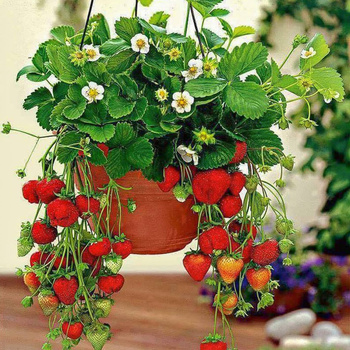
Growing strawberries in the ground is not the only option for beginners. You can also plant them in pots or planters — everbearing strawberries are perfect for this. One such variety is ‘Albion’. It is appreciated by both beginners and experienced growers. It produces large, sweet–tart fruit that appear every three weeks from July to October. It is a vigorous variety, resistant to pests and diseases except for anthracnose.
Traditional Polish strawberry varieties
Old strawberry varieties, grown in Poland for decades, are distinguished by high resistance to serious diseases and persistent pests, as well as by their tolerance of spring frosts. One of them is 'Elkat', which is a mid-early, very high-yielding variety, and also not susceptible to grey mould, powdery mildew or leaf diseases.
How to care for strawberry plants on an allotment?
You already know that some strawberry varieties are easy to grow, but you still cannot cultivate them without at least minimal involvement. That is why we have prepared a short strawberry-growing guide for you.
1. Strawberries must be planted in a sunny, well-weeded area with properly prepared soil, as mentioned earlier. The soil should be slightly acidic.
2. Plant strawberries 30–35 cm apart, ensuring their roots do not curl inside the planting hole. They must not be planted too deeply. The characteristic thickened part above the roots — the crown — must not be covered with soil.
3. Water strawberries regularly, but do not overwater them to avoid root rot.
4. Strawberries growing in fertile soil do not need heavy feeding. The most important fertilisation takes place before planting and after harvest. Organic fertilisers are recommended for amateur cultivation.
5. Two weeks after fruiting ends, mow the strawberries and remove their leaves. This reduces the risk of diseases and pests and strengthens the plants for the next season.
6. Strawberries should not grow in the same spot for more than 3–4 years. After that time, plant peas, beans, garlic, onions, dill, carrots, beetroot or celery in that place.
7. Do not plant strawberries where brassicas or cucumbers were previously grown, and avoid locations where wild strawberries, raspberries or roses grew the previous year. Strawberries should also not be planted next to these plants.
Do strawberries fruit in the first year?
Growing strawberries in the garden is ideal for those who do not want to wait long for results. When planting fruit trees, several years usually pass before harvest, but strawberries are quite different.
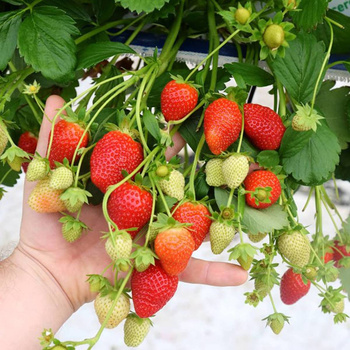
Frigo strawberry plants, which are planted in the ground or in pots in spring, produce fruit even six weeks after planting! Other types of strawberry plants will also bear fruit in the first year. However, you must be aware that the first harvest will not be very abundant. The following season, there will be many more strawberries! It is also important to know that everbearing strawberries are an exception — they fruit abundantly already in the first year. Their extended harvest period is another great advantage.